Showing posts with label folk metal. Show all posts

March 14, 2014

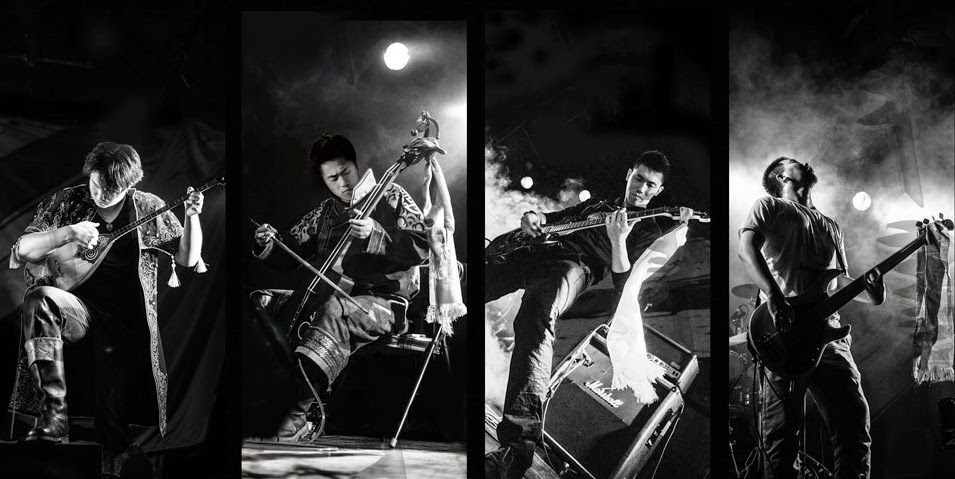
Tennger Cavalry - Ancient Call (2014)


I've never been a huge fan of folk/pagan metal bands because most of them are too over the top and bombastic for my tastes. The fact that many folk metal bands tend to deal exclusively with Norse or Slavic mythology is also offputting, as well as the constant use of weird folk instruments that nobody ever heard of - COBZA = METAL. There's also the small problem that there are two main types of folk metal bands:

  • ultra srs bands that are really in tune with their ancestors and only sing about Viking longboats, wolves, Norse legends and brave warriors - zzzzzz who cares? Typical examples include Arkona, Bucovina, Falkenbach and the gross bearded kings of Norse dorkery, Amon Amarth, who are pretty much releasing the same album for the past 20 years yet nobody seems to care.
  • bands who take it all as a joke, which would be slightly better except most of them play annoying folk metal songs about beer, goblins and beer drinking goblins and I just can't deal with that stuff. I think Trollfest are one of these bands? Whatever.

Despite the tragic state of this Odin forsaken metal genre, interesting folk metal bands do manage to trickle down here and there. Like this totally awesome North Asian nomadic metal outfit called Tennger Cavalry, hailing from the steppes of China. Their latest album, Ancient Call, infuses metal with Mongolian folk music played on traditional Asian instruments and Tibetan throat singing. The metal part in itself is nothing special - just some fast, galloping, distorted thrashy riffs, fast drumming and decent, but generic harsh vocals. But the exotic instruments in the mix are an absolute delight and turn what could have been a painfully boring album into the soundtrack to Genghis Khan's marauding hordes invading Europe and ruining everybody's lives. Did you know that the Mongolians ruled, at one point, over the entire Asian continent and were well into their way across the rest of Eurasia, causing the entire Western Europe to collectively shit their pants because the Golden Hordes were infamous for burning settlements to the ground and constructing giant pyramids out of the severed heads of men, women and children? It was just a rulership technicality that drove the Mongolians back to their homeland, or else Europe would have been a very different place right now and we probably would have run a blog about horseback archery.

Some of the songs on Ancient Call are a bit long and tend to get boring after a while, but there's no denying that Tennger Cavalry have managed to stand out from the dull folk metal crowd and carve a unique sound that's both heavy and exotic. So what are you waiting for? Get your shamisen on!


July 25, 2012

Falkenbach - ...Magni Blandinn Ok Megintiri... (1998)


I'm certainly not the biggest folk/viking/pagan metal fan around. I'm basically clueless when it comes to bands that sing about sailing the seas on longboats and pillaging villages - the only ones I know are Arkona and Ensiferum. And Korpiklaani, I guess, but I hate them. What's with all the retarded songs about booze? Get real. Are Amon Amarth pagan metal, too? Doesn't matter, I hate them too. I'd rather watch paint dry than listen to a whole album by those hacks.

There is one folk metal band, though, that managed to capture me, and it's probably an unlikely one. Falkenbach is my single favorite Norse-themed band ever, probably because it ignores some of the trademarks of the genre. Booming, epic production? Nope, Falkenbach has more of a bedroom-like production, with rather thin guitars and buried drums. A thousand different whistles, flutes, gongs, trumpets, horns and other assorted "traditional" instruments, all playing at once? No dice, sole permanent member Vratyas Vakyas keeps it simple, using only drums, guitars, bass and synths. Highly polished vocals with female choirs and shit? Not really. Vratyas Vakyas also handles vocal duties. The growling vocals are pretty bad, but his clean, majestic voice more than makes up for it. Lyrics lifted from old Norse legends and tales? Actually, yes. Hey, I didn't say Falkenbach looks over all of the genre's staples. Despite his obvious disregard for some of folk metal's unwritten rules, Vratyas Vakyas manages to create some beautiful songs that, although rather repetitive, are highly atmospheric and speak of times long gone, of sword, shield and blood.

And he's doing it more honestly and confidently than 90% of all those jackasses wearing animal pelts and wearing battle make-up. I hope they all drown.


July 21, 2012

Orphaned Land - Mabool: The Story of the Three Sons of Seven (2004)

Ladies and gents, we got some great news for ya'll: Tzeeac has taken under its wing yet another mindless minion. He goes by the name of Zulu and, apparently, he's a hard-working member of society and an outstanding citizen. This contradicts pretty much everything we stand for, but hey, who are we to judge? He likes what we worship, so it should be a'ight. 

Without further ado, we present to you his very first review. We'll let you decide if he's cool enough to hang with us. 


I stumbled across this band (figuratively speaking, of course) about three years ago, while digging through allmighty Google for some Swallow the Sun reviews (I tend to do that sometimes, the digging up part) and they were pegged as something close to the second coming down of Christ. The band itself hails from Israel, specialize in blending death metal with jewish and arabic folklore and this album tells a story about the three angels that each represent a specific branch
of religion (Judaism, Islam and Christianity).

Birth of the Three starts the album a bit on the safe side, as the listener is introduced slowly to all that Orphaned Land stands for. It's not a great track per se, but for me it worked very well, because I was not disappointed with what came next: I say this because in many cases, a band pummels you with a great first song and then loses energy throught the course of the album -  here comes to mind the piece Scream Machine by Beyond Fear (Tim "The Ripper" Owens, anyone?) from the self-titled album.

What comes next is a sonic assault composed of crunchy guitars, clean and growled vox, some tasteful soloing (see the track The Storm Still Rages Inside), chants in Hebrew, Latin and Yemen (with lyrics taken from The book of Genesis and also from Rabbi Shalom ben Yosef Shabbazi's poems), some oriental percussion, keyboards, synths and piano (Norra el Norra stands apart with a great piano ending by Eden Rabin) and a sparring use of Bağlama, Bouzouki and Oud (google is your friend with these ones). In other words, the album is massive; and to get an idea of how massive it is, a total of 25 people are credited for the production of this beast, not including the five permanent band members.


As an overall feel, I'd have to say the flow is very good, and despite the constant changing of instrumental passages, the atmosphere is retained. The most important thing is that after you reach the end of the album, it does not feel like a random collection of songs, but a piece of music with an identity of its own. For me, it's what I strive to find in any musical entity, and here is where Mabool delivers the most.

What's there more to say, besides the fact that I highly recommend it? (not only to metal fans, but to every music listener with an open mind). Listen to it and make your own decision, but I doubt that you'll be disappointed.


Pros: Originality, flow, good mixing of different passages, interludes that you won't be skipping.

Cons: Death vocals could be a little more aggressive and the rhythm guitar sounds a bit flat (but I'm nitpicking here).

Highlights: The Kiss of Babylon, Halo Dies, Norra el Norra, The Storm Still Rages Inside
Rating: 9

Track List
  1. "Birth of the Three (The Unification)" – 6:57
  2. "Ocean Land (The Revelation)" – 4:43
  3. "The Kiss of Babylon (The Sins)" – 7:23
  4. "A'salk" – 2:05
  5. "Halo Dies (The Wrath of God)" – 7:29
  6. "A Call to Awake (The Quest)" – 6:10
  7. "Building the Ark" – 5:02
  8. "Norra el Norra (Entering the Ark)" – 4:24
  9. "The Calm Before the Flood" – 4:25
  10. "Mabool (The Flood)" – 6:59
  11. "The Storm Still Rages Inside" – 9:20
  12. "Rainbow (The Resurrection)" – 3:01


P.S: They had a show recently in Bucharest, but for reasons that I don't seem to remember I couldn't make it to see them, so for now I'm sticking to the album version. Next time I won't make the same mistake.

July 8, 2011

Bucovina - Duh EP (2010)


Ieşenii de la Bucovina sunt una din cele mai cunoscute trupe de metal româneşti, precum şi - iar asta e o doză pură de subiectivism nesimţit - una din cele mai faine trupe de metal româneşti la ora actuală. Albumul lor de debut, Ceasul Aducerii Aminte, lansat în 2006, m-a captivat acum doi ani, când i-am şi văzut pe trupeţi live, în defuncta Epocă a Metalelor. Sunt conştient că este întru totul posibil ca albumul să nu-mi fi trezit niciun interes dacă ar fi fost opera unei trupe din orice altă ţară, dar n-am putut să rămân indiferent la versurile în limba română şi la sound-ul brut (doamne ce-mi plăcea bass-ul, care se auzea atât de PUTERNIC), "murdar", cu accente black metal pe alocuri, care mă ducea cu gândul la maestrul folk metal, Falkenbach. Clarone, Ceasul Aducerii Aminte i-a propulsat pe băieţii de la Bucovina sus de tot în topul meu personal.


În 2010 a apărut, out of fucking nowhere (eu unul habar n-aveam de dânsul până la lansare), Duh, un EP de cinci piese care, zice-se, ar constitui un mic teaser pentru un viitor album full-lenght al trupei. Duh constituie o evoluţie din toate punctele de vedere. Începând cu coperta, realizată de faimosul Costin Chioreanu, şi terminând cu producţia excelentă, avem parte de un disc extraordinar, mărturie de neclintit a awesomeness-ului caracteristic Bucovina.

Cele cinci piese se leagă foarte bine între ele. Vuiet Negru de Izvor este un intro scurt, de 2 minute, care aduce aminte de Nightwish în perioada când chiar erau buni. Cântecul omonim este o piesă foarte ritmată, cu nişte riff-uri viking metal care mă ung la inimă şi în care Luparul îşi etalează fără modestie vocea clean superbă, de muntean voinic, în putere, strigând versurile care mi-au rămas întipărite în minte de la prima ascultare:

Surul lup al codrului, Pasãrea vãzduhului,
Pãstrãvul pãrãului, Iarba câmpului,
 Cetina bradului, Vechiul muşchi al trunchiului
 Ascunzişul râsului, Susurul izvorului! 

Duh de strajã, Duh - veghetor
 Duh de vrajã, Duh - nepieritor! 

Straja este probabil piesa mea preferată de pe album, fiind o prelucrare folk metal a unui vechi cântec de cătănie, cules, pare-se de Grigore Lese, ale cărui versuri au fost preluate şi de trupe. Luparul este cu siguranţă omul potrivit la cântecul potrivit, iar interpretarea lui mă unge la inimă, mă! Straja este, cred, o piesă mai veche în repertoriul Bucovina, căci îmi aduc sigur aminte ce mult mi-a plăcut de Luparul la concertul din Constanţa când a început să intoneze versurile celebre:

Cântă cucul,bată-l vina
De răsuna Bucovina
Cântă cucul,bată-l vina
 De răsună Bucovina!

 Frumos de tot. Mestecăniş este vedeta albumului, atingând toate punctele esenţiale ale unui cântec-drapel Bucovina: vocea grandioasă a Luparului, nişte growl-uri tari venite fix de la Crivăţ, clape atmosferice, riff-uri de chitară viguroase şi melodioase, toate combinate într-una din cele mai mişto piese pe care le-au scos vreodată băieţii. Sunt convins că deja este hit pe la concerte şi pot doar să aştept ziua când voi răcni şi eu în faţa scenei: MESTECĂNIŞ! DE STRAJĂ-N INIMA BUCOVINEI! MESTECĂNIŞ! DIN VREMURI DE DEMULT! RARARARARARARA!!!

EP-ul se încheie cam brusc, dar foarte frumos, cu o reiteraţie acustică a piesei Bucovina, Inima Mea, de pe Ceasul Aducerii Aminte. De la prima ascultare, a fost clar că această variantă acustică s-ar fi simţit ca acasă pe Kveldssanger-ul celor de Ulver, respirând aceeaşi atmosferă încărcată de melancolie ca piesele acustice ale maeştrilor norvegieni mai sus menţionaţi.

Duh este ajutat din plin şi de sunetul limpede ca apa de izvor, masterizat de Dan Swano, care s-a ocupat de sunetul unei bascule de mărime medie plină cu trupe. Fiecare riff, fiecare pedală, fiecare vers şi fiecare hi-hat se aude impecabil, producţia fiind unul din punctele forte ale albumului.

De fapt, dacă stau bine să mă gândesc, Duh are numai puncte forte. Mi-e foarte greu să găsesc ceva în neregulă cu EP-ul, exceptând faptul că se termină prea repede, lăsându-mă cu un gust puternic de "mai adă". Cum am zis, nu-s cel mai mai mare fan pagan/folk metal, dar Bucovina m-au cucerit iremediabil. Iar dacă ar fi să mă iau după Duh, aş zice că viitorul album Bucovina n-are cum să iasă altfel decât fantastic.

Să vie, dar!

http://www.realm-of-bucovina.com/